


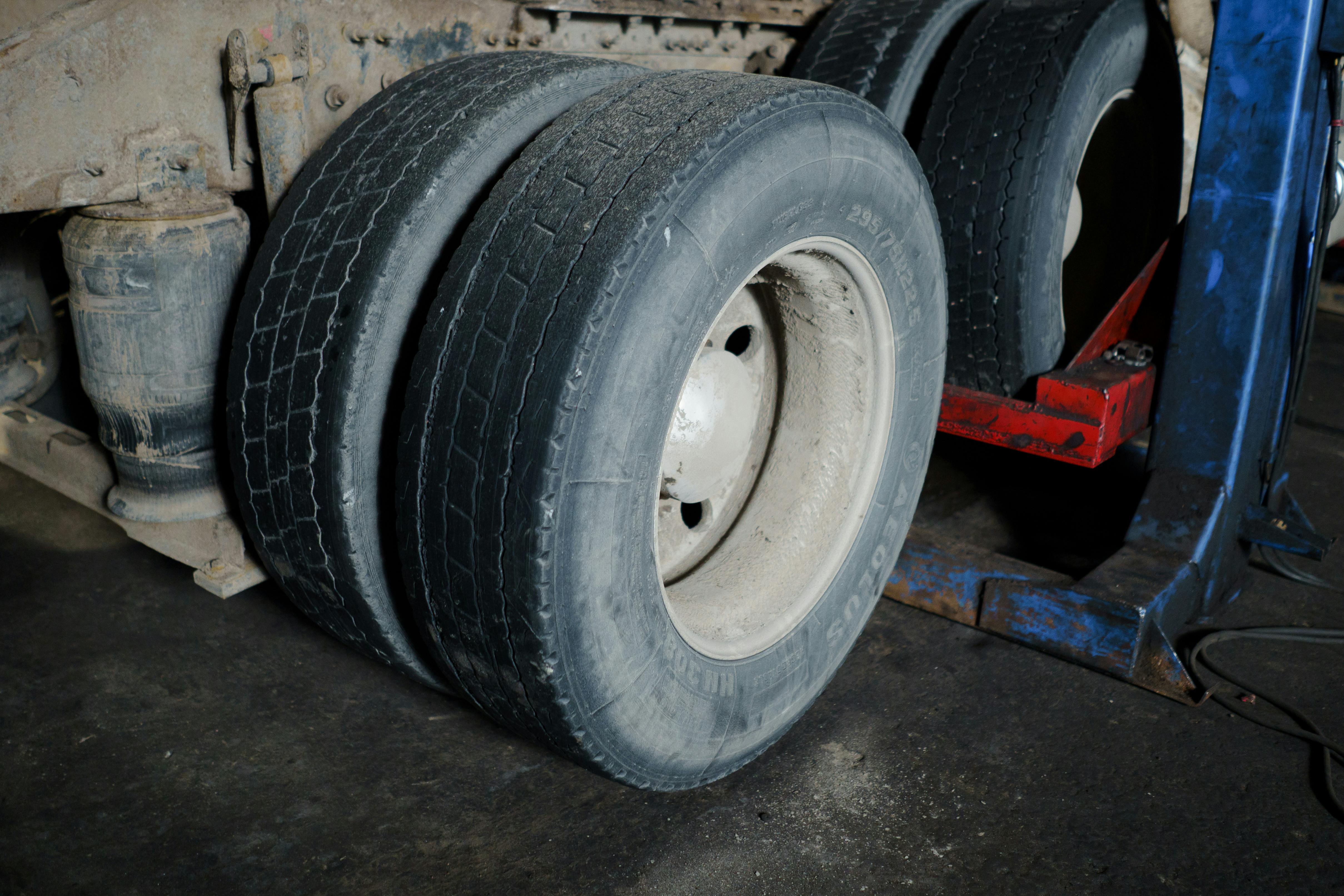
TPMS: Do They Actually Save You From a Blowout?
Spend ten minutes in any RV forum thread about tire pressure monitoring systems and you’ll see the same argument play out: half the replies are some version of “this thing saved my life,” and the other half is “expensive beeper that goes off every time the temperature changes.” Both groups own the same hardware. Both are telling the truth.
The disconnect comes from a misunderstanding of what TPMS actually does. It’s not a tire-health monitor. It’s not a blowout predictor. It’s a pressure sensor with a temperature reading bolted on, and it catches one specific kind of tire failure very well while being almost completely blind to the others. Whether it’s worth it depends on which kind of failure you’re actually trying to prevent — and which preconditions you’ve already addressed upstream.
Here’s the surprising part: most RVs aren’t legally required to have a TPMS at all. The federal rule that put a TPMS in every passenger car coming off the line since 2008 deliberately walks past the heaviest, most weight-sensitive vehicles on the road.
The Federal Blind Spot: Why Your RV Probably Doesn’t Have One
FMVSS 138, the standard that mandates TPMS on new vehicles, only applies to vehicles with a gross vehicle weight rating of 10,000 pounds or less — and explicitly excludes vehicles with dual wheels on an axle.
Read that twice. The cars and light trucks that already have the most stable tire-load envelopes — passenger sedans, half-ton pickups, crossovers — are required to have TPMS from the factory. The vehicles that arguably need it most — fifth wheels, Class A motorhomes, dually tow trucks, anything heavy enough to flatten a sidewall on a single bad PSI day — are exempt.
The practical consequence: if you tow a 14,000 lb fifth wheel behind a one-ton dually, neither vehicle is required to have a TPMS, and almost certainly neither one does. The trailer has none. The truck’s factory system covers only its own wheels — assuming it has one, which it might not if it’s a dually. If you want to monitor the tires that matter most, you’re buying it yourself, after the fact, and installing it on every wheel position you care about.
What TPMS Is Actually Good At: The Slow-Leak Save
The tire-safety industry’s working assumption — repeated by NHTSA, tire manufacturers, and roadside-assistance programs — is that the majority of roadside flats are preceded by a slow leak. A nail picked up at a gas station. A slow valve leak. A small puncture the driver never notices. Pressure drifts down over hours or days; eventually the underinflated tire flexes too hard, builds heat, and lets go. That’s the failure mode TPMS was built for.
A direct TPMS — the kind that puts a real pressure sensor at every wheel — sees a 5 PSI drop the moment it happens. The driver gets an audible alert and a number on the screen. There’s enough warning to pull off, swap a tire if needed, or limp to the next exit before the underinflated tire flexes itself into a heat-driven failure. That’s the cascade you’re trying to interrupt: low pressure → excessive sidewall flex → heat buildup → belt separation → blowout.
The federal effectiveness data backs this up. NHTSA’s TPMS evaluation study, based on 6,103 vehicles surveyed, found that vehicles equipped with TPMS were 55.6% less likely to have at least one severely underinflated tire (defined as 25% or more below the manufacturer’s recommended pressure). The rate of severe underinflation dropped from 23.1% in vehicles without TPMS to 11.8% in vehicles with it.
That’s the strongest statistical case you’ll find for TPMS, and it’s worth taking seriously. The technology demonstrably reduces the worst-case scenario it was designed to address.
In RV-specific terms, the saves tend to be undramatic. A slow leak from a valve core that’s reached the end of its life. A trailer tire dropping pressure overnight in a way you’d never catch with a morning gauge if the trailer’s already been sitting for two days. A puncture you didn’t hear over road noise. None of these are cinematic. All of them, ignored, eventually become a roadside failure somewhere remote and inconvenient.
What TPMS Can’t Save You From
Here’s where the forum disagreements start. TPMS is a pressure sensor. It detects pressure changes. Anything that doesn’t show up as a pressure change first, it can’t see — and there are a lot of those.

Sidewall blowouts from impact damage. You hit a sharp pothole, a chunk of road debris, or a curb at a tight gas station turn. The sidewall takes the hit. The tire fails seconds or minutes later. By the time the pressure sensor sees the pressure drop, the failure is already happening. TPMS can’t predict structural damage; it can only confirm what already broke.
Tires aging out at correct pressure. RV tires die on a calendar, not a tread depth. The rubber compounds oxidize, the belts lose adhesion to the carcass, and a tire that looks fine at 80 PSI tread separates at 65 mph because the bonds that held it together for ten years have slowly let go. Most safety experts recommend replacing RV tires by 6–10 years from the DOT date code, with trailer tires often replaced more frequently. A TPMS will read 80 PSI right up until the tread separates. The pressure was correct. The tire was the problem.
Overloaded tires running at “correct” pressure. This is the RV-specific killer. If your tire is rated for 3,000 lb at 80 PSI and the wheel position is actually carrying 3,400 lb, the gauge will read 80 PSI. The TPMS will report nothing. But the tire is heating catastrophically because it’s flexing harder than it was designed to, and you’re driving on a tire that is, by definition, beyond its load rating. The temperature alarm on a quality TPMS might catch this — but only after damage is already accumulating.
Wrong load range tires. Same problem as overload, but built into the spec. Someone replaced your Load Range E tires with Load Range D because the price was right. The pressure number works fine. The capacity doesn’t. The TPMS can’t tell you the tire is structurally underrated for what you’re asking it to do.
The honest framing: TPMS is a symptom monitor, not a tire-health monitor. It tells you when one specific symptom of one failure pathway has started. For everything else, you’re on your own — which means the work has to happen upstream, before the tire ever rolls.
Why RVs Are the Hard Case for TPMS
If you’re running TPMS on a sedan, the upstream story is simple. The factory engineered the tire-to-load relationship. The vehicle came with the right tires for its weight. You’re unlikely to be 400 lb over GAWR on the rear axle.
RVs are not sedans.
The RV Safety & Education Foundation (RVSEF) has weighed thousands of rigs at individual wheel positions over the years, and the data is uncomfortable:
- 31% of motorhomes exceeded a tire rating without exceeding their axle rating. A truck-scale axle weight wouldn’t have flagged it. Side-to-side imbalance pushed one tire past its limit while the axle as a whole looked fine.
- 40% of motorhome rear tires were overloaded.
- 28% of motorhomes were imbalanced side-to-side by 400 pounds or more on at least one axle.
- 60% of tow vehicles, 51% of travel trailers, and 55% of fifth wheels weighed by RVSEF were overweight in some way.
A separate Bridgestone/Firestone survey found 4 out of 5 RVs had at least one underinflated tire, with one-third of those dangerously underinflated. And the Good Sam VIP insurance program reports that tire failures account for 60–70% of comprehensive insurance claims — by far the largest single category.
Now overlay TPMS on that picture. A device that catches gradual pressure loss is genuinely valuable when 4 out of 5 rigs are already starting from underinflated. A device that doesn’t catch overloaded-but-correctly-inflated tires is a problem when 31% of motorhomes have a tire over its rating and the owner doesn’t know it.
This is why the conversation about TPMS is fundamentally different for RVers than for car drivers. The upstream conditions are worse. The exposure is higher. And the device’s blind spots line up neatly with the failures RVs are most prone to in the first place.
Get the Upstream Right First
If you take only one thing from this post, take this: TPMS is the last line of defense, not the first. Putting one on a rig with overloaded, aged, or wrong-rated tires is buying a smoke detector for a building that’s already on fire.
The first line is upstream. It looks like this:
- Know your actual loaded weight at each wheel position. Not just the axle. Side-to-side matters. RVSEF’s data is built on the fact that 31% of motorhomes hide a tire-overload behind a “fine” axle weight.
- Verify your tire ratings against your actual weight. Each tire’s max load (molded into the sidewall) versus what that tire is actually carrying at the heaviest end of its axle.
- Check the DOT date code on every tire. Last four digits of the DOT code = week and year of manufacture. If you’re past 7 years, plan replacement regardless of tread.
- Set cold pressure from a load-and-inflation table for your specific tire size, based on your measured weight. Not the sidewall max. Not the door sticker.
Our free GVWR Calculator walks through the first three of those in one pass — per-axle and per-tire weight against ratings, DOT date code analysis, and a load-range check that flags any wheel position where the tire isn’t rated for what it’s being asked to carry. It’s the upstream check that TPMS by itself cannot do.
Once that’s clean, the RV tire pressure guide covers the cold-pressure math for your specific axle weights. Get those two pieces right, and TPMS becomes what it was designed to be: a backup that catches the slow leak before it becomes a blowout, on a tire that was set up correctly to begin with.
Choosing a TPMS That Fits Your Rig
If you’ve made it this far, you’re probably in the market. A few practical notes — not endorsements, just the variables to think about.
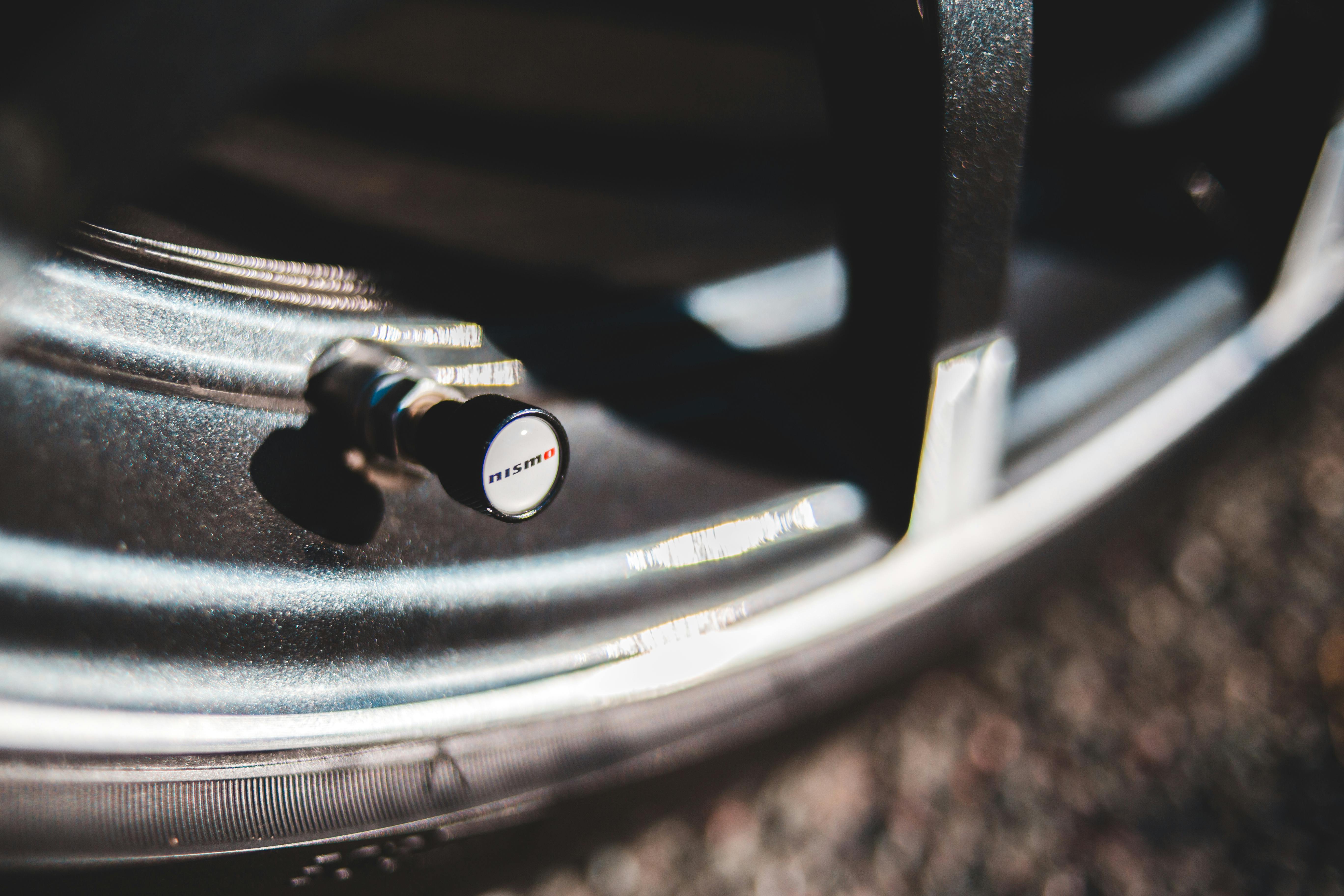
Sensor type. Three options. Internal sensors mount on the rim and require dismounting the tire to swap batteries — most accurate, theft-proof, no added leak point, but service is involved. External (valve-cap) sensors screw onto the valve stem — cheap, easy to swap, replaceable batteries, but they’re vulnerable to theft and add a tiny additional leak point. Flow-through sensors (the TST design) sit on the valve but let you air up without removing them — a good compromise for RV use, slightly bulkier on the stem.
Direct, not indirect. Skip indirect (ABS-based) systems for RV use entirely. They can miss pressure loss when all tires drop together, and they require recalibration every time you change pressure. Most aftermarket RV systems are direct anyway, but if you’re cross-shopping with a tow vehicle’s OEM system, this matters.
Pressure plus temperature. For RVs, temperature monitoring is non-negotiable. The pressure-temperature relationship runs about 1 PSI per 10°F, and one tire running 15–20°F hotter than its neighbors on the same axle is your first warning of an overload or developing failure — often earlier than the pressure alarm.
Update interval. 6 to 10 seconds is the standard for serious RV systems. Longer intervals mean longer reaction times to a real leak.
Tire count and vehicle profiles. Count every position you want monitored — RV plus toad plus tow vehicle plus any trailer. A 43-foot Class A pulling a car can easily need 12 sensors. Make sure the system you’re buying handles your count, and ideally lets you switch profiles between rigs.
The names you’ll see in any RV TPMS shopping list are TireMinder, TST, and EEZTire. They’re all in the $250–$500 range for a serious multi-tire system. The differences between them at this point are real but incremental — sensor design, monitor display, app experience, customer support. Read recent reviews and forum threads for whichever rig configuration matches yours; the TPMS landscape moves slowly enough that a year-old recommendation is usually still valid.
The Honest Verdict
Is a TPMS worth it? Yes — with conditions.
It’s worth it because it catches the single most common preventable failure pathway on the road: the slow leak that becomes a blowout. The federal data confirms that. The community anecdotes confirm that. For any rig that spends real time on the highway, the cost-to-benefit is straightforward.
It’s not worth it as a substitute for getting the rest of your tire situation right. A TPMS bolted onto a rig with overloaded, expired, or under-rated tires is a false sense of security with a price tag. The device monitors a symptom; it doesn’t fix the disease.
The order matters. Weigh your rig — every wheel position if you can, every axle at minimum. Verify each tire’s load rating against what it’s actually carrying. Check the DOT date code on every tire and replace the ones running on borrowed time. Set your cold pressure from a load-and-inflation table, not from the sidewall max or the door sticker. Then add a TPMS as the safety net that catches the one thing all of that work can’t prevent.
Do it in that order and TPMS does exactly what its proponents claim — saves you from the blowout that was actually coming. Skip the upstream work and TPMS is, in fact, an expensive beeper. Both forum camps are right about the same product. The difference is the rig it’s installed on.
If you haven’t done the upstream check yet, start with the GVWR Calculator — it’ll tell you in about ten minutes whether your tires are even rated for what your rig is currently asking them to do. That’s the answer that matters most. Everything else, including TPMS, is downstream of it.